

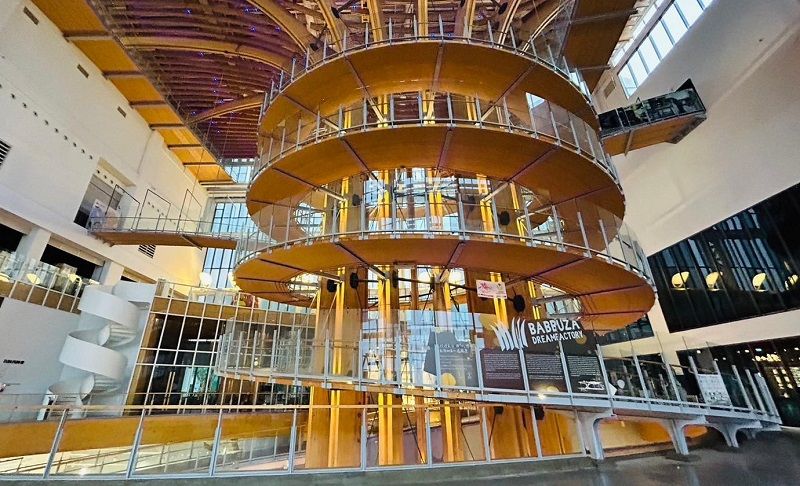
Design System |Babbuza Dreamfactory
Where Design Thinking Becomes Sustainable Manufacturing
Babbuza Dreamfactory is not simply a factory. It is a physical expression of Yira Wu’s design philosophy — where design, manufacturing, and sustainability operate as one integrated system. For Yira, sustainability is not an added feature or certification. It begins at the design stage and is realized through how materials are chosen, how products are manufactured, and how systems perform over time.
Designing Sustainability from the Inside Out
Babbuza Dreamfactory was designed to rethink how a modern manufacturing facility should function — not only efficiently, but responsibly. The building achieved LEED V4 Gold Certification, reflecting SHUTER’s commitment to long-term environmental responsibility, even at higher construction and operational costs. More importantly, the factory serves as a working model where sustainable design decisions directly influence production efficiency, material usage, and product scalability.

Sustainability as a Design System
Aligned with Yira Wu’s belief that “storage is behavior,” sustainability at Babbuza Dreamfactory is approached as an integrated system rather than a slogan. Through coordinated green building strategies, the factory significantly reduces water and energy consumption while supporting high-volume manufacturing — proving that environmental responsibility and industrial scalability can coexist by design.

The Dream Building Space
Where Sustainability Becomes Tangible. Inside Babbuza Dreamfactory, Yira Wu created the Dream Building Space —a dedicated environment where sustainability is no longer abstract, but visible, explainable, and shareable. Rather than presenting sustainability through data alone, this space allows brand partners to experience how materials, design decisions, and manufacturing processes come together to shape responsible products.

A Space Designed for Brand Understanding
Designed as an experiential space for brand partners and designers, the Dream Building Space translates materials, manufacturing, and sustainability into a shared design language — helping visitors understand not only what livinbox creates, but how responsibility is built into every product from concept to production.

From Factory Tour to Brand Storytelling
For brand clients, the Dream Building Space serves a deeper purpose. It provides a shared language between design, manufacturing, and brand communication — enabling partners to confidently translate livinbox’s sustainable practices into their own product narratives. Sustainability here is not a claim. It is a process that can be seen, explained, and trusted.

From Materials to Manufacturing Decisions
At Babbuza Dreamfactory, post-consumer recycled materials are treated not as constraints, but as design inputs. By studying how materials behave in tooling and production, sustainability is embedded into the design process from the beginning — allowing responsible choices to move beyond concepts and become manufacturable, scalable solutions.

Designed as Part of the Designer’s System
As part of Yira Wu’s belief that manufacturing itself is a design act, the Dream Building Space reflects how livinbox approaches sustainability — not as a feature, but as a design responsibility. This space completes the connection between design philosophy, manufacturing reality, and brand collaboration.

- Video